•  
Women Pluck Tea Leaves in Siliguri - India

Women Pluck Tea Leaves in Siliguri - India

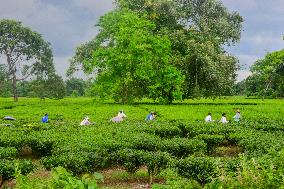
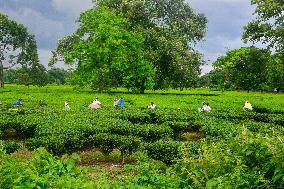
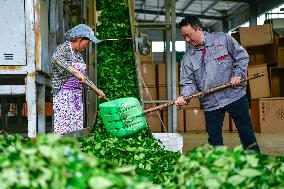
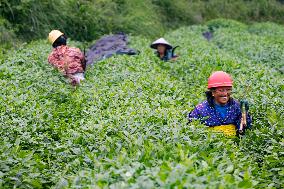
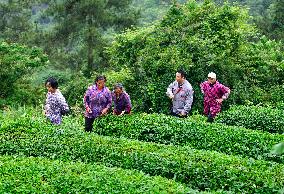
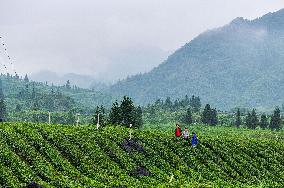
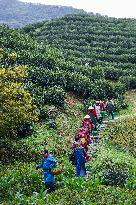
Female tea garden workers pluck tea leaves at Dagapur Tea Garden near Siliguri, India, on July 4, 2025. Dressed in traditional clothing and carrying baskets, they work under the morning sun amid lush plantations. The Siliguri region, in the Himalayan foothills, is known for tea production that supports local livelihoods and India’s export economy. Despite their crucial role, tea workers often face low wages and tough conditions, highlighting ongoing calls for labor reform. Photo by Diptendu Dutta/Middle East Images/ABACAPRESS.COM

  •  
Women Pluck Tea Leaves in Siliguri - India

Women Pluck Tea Leaves in Siliguri - India

Female tea garden workers pluck tea leaves at Dagapur Tea Garden near Siliguri, India, on July 4, 2025. Dressed in traditional clothing and carrying baskets, they work under the morning sun amid lush plantations. The Siliguri region, in the Himalayan foothills, is known for tea production that supports local livelihoods and India’s export economy. Despite their crucial role, tea workers often face low wages and tough conditions, highlighting ongoing calls for labor reform. Photo by Diptendu Dutta/Middle East Images/ABACAPRESS.COM

  •  
Women Pluck Tea Leaves in Siliguri - India

Women Pluck Tea Leaves in Siliguri - India

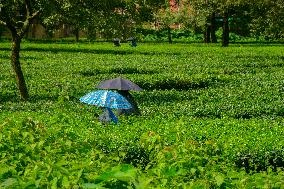
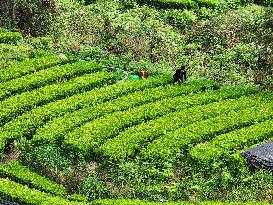
Two female workers pluck tea leaves at Dagapur Tea Garden near Siliguri, India, on July 4, 2025. Dressed in traditional attire, they work under the morning sun in the lush plantations. The region is known for its tea production, though workers often face low wages and tough conditions. Photo by Diptendu Dutta/Middle East Images/ABACAPRESS.COM

  •  
Jasmine Flower Industry in Guangxi - China

Jasmine Flower Industry in Guangxi - China

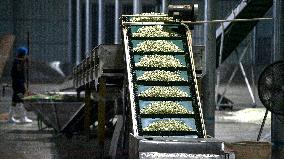
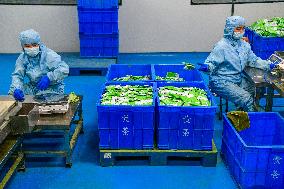
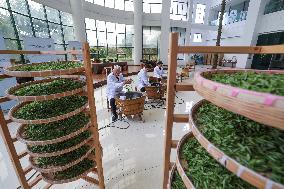
A production line of jasmine tea is pictured at a local tea plant in Hengzhou City, south China's Guangxi Zhuang Autonomous Region, on July 31, 2025. Hengzhou, dubbed the "hometown of jasmine in China," is home to some 340,000 jasmine flower farmers and over 180,000 mu (12,000 hectares) of jasmine fields. In recent years, the city has promoted the development of a whole industrial chain covering jasmine planting, processing and cultural tourism. Photo by Huang Xiaobang/Xinhua/ABACAPRESS.COM

  •  
Promoting Matcha Tea In Guizhou - China

Promoting Matcha Tea In Guizhou - China

Wei Yong R) demonstrates the technique of drying tea leaves to a villager at a tea processing factory in Jiangkou County, southwest China's Guizhou Province, China, on May 15, 2025. Located at the foot of Mount Fanjing, a UNESCO World Heritage Site, Jiangkou County is a powerhouse in the world's matcha industry. As a native of Jiangkou and a specialist of tea industry, Wei Yong works at the research and development department of Guizhou Gui Tea Group Co. Wei, who originally majored in chemical engineering, never imagined that his technical experience in product testing could contribute to the research and development of matcha industry in his hometown. He not only offers professional suggestions in various processes of matcha production, but also conducts tests and provides feedback on matcha products. Wei believes that matcha has brought not only technological breakthroughs but also reshaped the industrial structure of the tea industry in Guizhou. Matcha helps tea farmers increase their income while promotin

  •  
Promoting Matcha Tea In Guizhou - China

Promoting Matcha Tea In Guizhou - China

Tea farmers work at a tea garden in Jiangkou County, southwest China's Guizhou Province, China, on May 15, 2025. Located at the foot of Mount Fanjing, a UNESCO World Heritage Site, Jiangkou County is a powerhouse in the world's matcha industry. As a native of Jiangkou and a specialist of tea industry, Wei Yong works at the research and development department of Guizhou Gui Tea Group Co. Wei, who originally majored in chemical engineering, never imagined that his technical experience in product testing could contribute to the research and development of matcha industry in his hometown. He not only offers professional suggestions in various processes of matcha production, but also conducts tests and provides feedback on matcha products. Wei believes that matcha has brought not only technological breakthroughs but also reshaped the industrial structure of the tea industry in Guizhou. Matcha helps tea farmers increase their income while promoting the healthy and rapid development of the tea industry in Guizhou. "

  •  
Promoting Matcha Tea In Guizhou - China

Promoting Matcha Tea In Guizhou - China

A drone photo taken on May 15, 2025 shows Wei Yong (2nd, R) explaining key points of harvesting tea leaves to villagers in Jiangkou County, southwest China's Guizhou Province, China, on May 15, 2025. Located at the foot of Mount Fanjing, a UNESCO World Heritage Site, Jiangkou County is a powerhouse in the world's matcha industry. As a native of Jiangkou and a specialist of tea industry, Wei Yong works at the research and development department of Guizhou Gui Tea Group Co. Wei, who originally majored in chemical engineering, never imagined that his technical experience in product testing could contribute to the research and development of matcha industry in his hometown. He not only offers professional suggestions in various processes of matcha production, but also conducts tests and provides feedback on matcha products. Wei believes that matcha has brought not only technological breakthroughs but also reshaped the industrial structure of the tea industry in Guizhou. Matcha helps tea farmers increase their inc

  •  
Promoting Matcha Tea In Guizhou - China

Promoting Matcha Tea In Guizhou - China

An aerial drone photo taken on May 15, 2025 shows Wei Yong (C) explaining key points of planting to tea farmers in Jiangkou County, southwest China's Guizhou Province. Located at the foot of Mount Fanjing, a UNESCO World Heritage Site, Jiangkou County is a powerhouse in the world's matcha industry. As a native of Jiangkou and a specialist of tea industry, Wei Yong works at the research and development department of Guizhou Gui Tea Group Co. Wei, who originally majored in chemical engineering, never imagined that his technical experience in product testing could contribute to the research and development of matcha industry in his hometown. He not only offers professional suggestions in various processes of matcha production, but also conducts tests and provides feedback on matcha products. Wei believes that matcha has brought not only technological breakthroughs but also reshaped the industrial structure of the tea industry in Guizhou. Matcha helps tea farmers increase their income while promoting the healthy

  •  
Promoting Matcha Tea In Guizhou - China

Promoting Matcha Tea In Guizhou - China

Wei Yong R) checks samples of raw materials for matcha production with a colleague in Jiangkou County, southwest China's Guizhou Province, China, on May 14, 2025. Located at the foot of Mount Fanjing, a UNESCO World Heritage Site, Jiangkou County is a powerhouse in the world's matcha industry. As a native of Jiangkou and a specialist of tea industry, Wei Yong works at the research and development department of Guizhou Gui Tea Group Co. Wei, who originally majored in chemical engineering, never imagined that his technical experience in product testing could contribute to the research and development of matcha industry in his hometown. He not only offers professional suggestions in various processes of matcha production, but also conducts tests and provides feedback on matcha products. Wei believes that matcha has brought not only technological breakthroughs but also reshaped the industrial structure of the tea industry in Guizhou. Matcha helps tea farmers increase their income while promoting the healthy and r

  •  
Mount Fanjing Matcha Industry - China

Mount Fanjing Matcha Industry - China

A drone photo shows a farmer weeding at a tea garden in Jiangkou County of Tongren, southwest China's Guizhou Province, on April 16, 2025. Located at the foot of Mount Fanjing, a UNESCO World Heritage Site, Jiangkou County is a powerhouse in the world's matcha industry. The county boasts over 10,000 hectares of tea plantations, nearly a fifth of which are dedicated to matcha production. In 2024, Jiangkou County produced more than 1,200 tonnes of matcha with a total output value of 350 million yuan (about 48.02 million U.S. dollars). The local matcha products have been exported to more than 40 overseas markets. Experts and agronomists believe that Guizhou, located on a plateau, possesses geographical and climatic advantages such as high altitude, low latitude, abundant fog and limited sunlight ideal for growing tea. Therefore, tea produced in this area is green, ecological and organic. Photo by Ou Dongqu/Xinhua/ABACAPRESS.COM

  •  
Mount Fanjing Matcha Industry - China

Mount Fanjing Matcha Industry - China

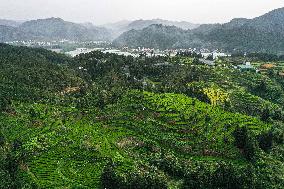
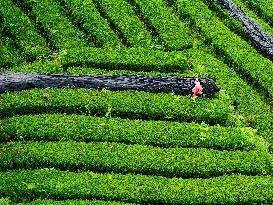
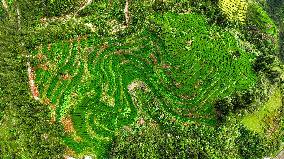
An aerial drone photo shows a tea garden in Jiangkou County of Tongren, southwest China's Guizhou Province, on April 16, 2025. Located at the foot of Mount Fanjing, a UNESCO World Heritage Site, Jiangkou County is a powerhouse in the world's matcha industry. The county boasts over 10,000 hectares of tea plantations, nearly a fifth of which are dedicated to matcha production. In 2024, Jiangkou County produced more than 1,200 tonnes of matcha with a total output value of 350 million yuan (about 48.02 million U.S. dollars). The local matcha products have been exported to more than 40 overseas markets. Experts and agronomists believe that Guizhou, located on a plateau, possesses geographical and climatic advantages such as high altitude, low latitude, abundant fog and limited sunlight ideal for growing tea. Therefore, tea produced in this area is green, ecological and organic. Photo by Yang Wenbin/Xinhua/ABACAPRESS.COM

  •  
Mount Fanjing Matcha Industry - China

Mount Fanjing Matcha Industry - China

Workers pack matcha powder at a tea industrial park in Jiangkou County of Tongren, southwest China's Guizhou Province, on April 14, 2025. Located at the foot of Mount Fanjing, a UNESCO World Heritage Site, Jiangkou County is a powerhouse in the world's matcha industry. The county boasts over 10,000 hectares of tea plantations, nearly a fifth of which are dedicated to matcha production. In 2024, Jiangkou County produced more than 1,200 tonnes of matcha with a total output value of 350 million yuan (about 48.02 million U.S. dollars). The local matcha products have been exported to more than 40 overseas markets. Experts and agronomists believe that Guizhou, located on a plateau, possesses geographical and climatic advantages such as high altitude, low latitude, abundant fog and limited sunlight ideal for growing tea. Therefore, tea produced in this area is green, ecological and organic. Photo by Yang Wenbin/Xinhua/ABACAPRESS.COM

  •  
Mount Fanjing Matcha Industry - China

Mount Fanjing Matcha Industry - China

A worker packs matcha powder at a tea industrial park in Jiangkou County of Tongren, southwest China's Guizhou Province, on April 14, 2025. Located at the foot of Mount Fanjing, a UNESCO World Heritage Site, Jiangkou County is a powerhouse in the world's matcha industry. The county boasts over 10,000 hectares of tea plantations, nearly a fifth of which are dedicated to matcha production. In 2024, Jiangkou County produced more than 1,200 tonnes of matcha with a total output value of 350 million yuan (about 48.02 million U.S. dollars). The local matcha products have been exported to more than 40 overseas markets. Experts and agronomists believe that Guizhou, located on a plateau, possesses geographical and climatic advantages such as high altitude, low latitude, abundant fog and limited sunlight ideal for growing tea. Therefore, tea produced in this area is green, ecological and organic. Photo by Ou Dongqu/Xinhua/ABACAPRESS.COM

  •  
Mount Fanjing Matcha Industry - China

Mount Fanjing Matcha Industry - China

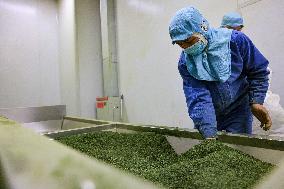
A staff member checks the raw materials for matcha production at a tea industrial park in Jiangkou County of Tongren, southwest China's Guizhou Province, on April 14, 2025. Located at the foot of Mount Fanjing, a UNESCO World Heritage Site, Jiangkou County is a powerhouse in the world's matcha industry. The county boasts over 10,000 hectares of tea plantations, nearly a fifth of which are dedicated to matcha production. In 2024, Jiangkou County produced more than 1,200 tonnes of matcha with a total output value of 350 million yuan (about 48.02 million U.S. dollars). The local matcha products have been exported to more than 40 overseas markets. Experts and agronomists believe that Guizhou, located on a plateau, possesses geographical and climatic advantages such as high altitude, low latitude, abundant fog and limited sunlight ideal for growing tea. Therefore, tea produced in this area is green, ecological and organic. Photo by Ou Dongqu/Xinhua/ABACAPRESS.COM

  •  
Mount Fanjing Matcha Industry - China

Mount Fanjing Matcha Industry - China

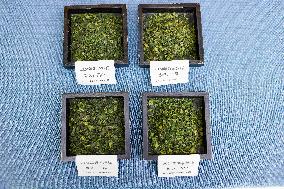
Raw materials for matcha production are on display in a tea industrial park in Jiangkou County of Tongren, southwest China's Guizhou Province, on April 14, 2025. Located at the foot of Mount Fanjing, a UNESCO World Heritage Site, Jiangkou County is a powerhouse in the world's matcha industry. The county boasts over 10,000 hectares of tea plantations, nearly a fifth of which are dedicated to matcha production. In 2024, Jiangkou County produced more than 1,200 tonnes of matcha with a total output value of 350 million yuan (about 48.02 million U.S. dollars). The local matcha products have been exported to more than 40 overseas markets. Experts and agronomists believe that Guizhou, located on a plateau, possesses geographical and climatic advantages such as high altitude, low latitude, abundant fog and limited sunlight ideal for growing tea. Therefore, tea produced in this area is green, ecological and organic. Photo by Ou Dongqu/Xinhua/ABACAPRESS.COM

  •  
Mount Fanjing Matcha Industry - China

Mount Fanjing Matcha Industry - China

A staff member produces matcha at a tea industrial park in Jiangkou County of Tongren, southwest China's Guizhou Province, on April 14, 2025. Located at the foot of Mount Fanjing, a UNESCO World Heritage Site, Jiangkou County is a powerhouse in the world's matcha industry. The county boasts over 10,000 hectares of tea plantations, nearly a fifth of which are dedicated to matcha production. In 2024, Jiangkou County produced more than 1,200 tonnes of matcha with a total output value of 350 million yuan (about 48.02 million U.S. dollars). The local matcha products have been exported to more than 40 overseas markets. Experts and agronomists believe that Guizhou, located on a plateau, possesses geographical and climatic advantages such as high altitude, low latitude, abundant fog and limited sunlight ideal for growing tea. Therefore, tea produced in this area is green, ecological and organic. Photo by Ou Dongqu/Xinhua/ABACAPRESS.COM

  •  
Mount Fanjing Matcha Industry - China

Mount Fanjing Matcha Industry - China

An aerial drone photo shows a farmer applying shading nets at a tea garden in Jiangkou County of Tongren, southwest China's Guizhou Province, on April 16, 2025. Located at the foot of Mount Fanjing, a UNESCO World Heritage Site, Jiangkou County is a powerhouse in the world's matcha industry. The county boasts over 10,000 hectares of tea plantations, nearly a fifth of which are dedicated to matcha production. In 2024, Jiangkou County produced more than 1,200 tonnes of matcha with a total output value of 350 million yuan (about 48.02 million U.S. dollars). The local matcha products have been exported to more than 40 overseas markets. Experts and agronomists believe that Guizhou, located on a plateau, possesses geographical and climatic advantages such as high altitude, low latitude, abundant fog and limited sunlight ideal for growing tea. Therefore, tea produced in this area is green, ecological and organic. Photo by Ou Dongqu/Xinhua/ABACAPRESS.COM

  •  
Mount Fanjing Matcha Industry - China

Mount Fanjing Matcha Industry - China

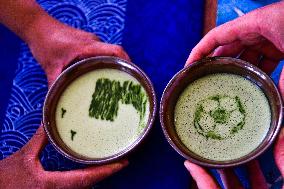
Matcha beverages are displayed at a tea industrial park in Jiangkou County of Tongren, southwest China's Guizhou Province, on April 14, 2025. Located at the foot of Mount Fanjing, a UNESCO World Heritage Site, Jiangkou County is a powerhouse in the world's matcha industry. The county boasts over 10,000 hectares of tea plantations, nearly a fifth of which are dedicated to matcha production. In 2024, Jiangkou County produced more than 1,200 tonnes of matcha with a total output value of 350 million yuan (about 48.02 million U.S. dollars). The local matcha products have been exported to more than 40 overseas markets. Experts and agronomists believe that Guizhou, located on a plateau, possesses geographical and climatic advantages such as high altitude, low latitude, abundant fog and limited sunlight ideal for growing tea. Therefore, tea produced in this area is green, ecological and organic. Photo by Yang Wenbin/Xinhua/ABACAPRESS.COM

  •  
Mount Fanjing Matcha Industry - China

Mount Fanjing Matcha Industry - China

A staff member works at a matcha factory in Jiangkou County of Tongren, southwest China's Guizhou Province, on April 14, 2025. Located at the foot of Mount Fanjing, a UNESCO World Heritage Site, Jiangkou County is a powerhouse in the world's matcha industry. The county boasts over 10,000 hectares of tea plantations, nearly a fifth of which are dedicated to matcha production. In 2024, Jiangkou County produced more than 1,200 tonnes of matcha with a total output value of 350 million yuan (about 48.02 million U.S. dollars). The local matcha products have been exported to more than 40 overseas markets. Experts and agronomists believe that Guizhou, located on a plateau, possesses geographical and climatic advantages such as high altitude, low latitude, abundant fog and limited sunlight ideal for growing tea. Therefore, tea produced in this area is green, ecological and organic. Photo by Ou Dongqu/Xinhua/ABACAPRESS.COM

  •  
Mount Fanjing Matcha Industry - China

Mount Fanjing Matcha Industry - China

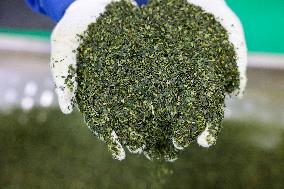
Matcha powder is pictured at a matcha factory in Jiangkou County of Tongren, southwest China's Guizhou Province, on April 14, 2025. Located at the foot of Mount Fanjing, a UNESCO World Heritage Site, Jiangkou County is a powerhouse in the world's matcha industry. The county boasts over 10,000 hectares of tea plantations, nearly a fifth of which are dedicated to matcha production. In 2024, Jiangkou County produced more than 1,200 tonnes of matcha with a total output value of 350 million yuan (about 48.02 million U.S. dollars). The local matcha products have been exported to more than 40 overseas markets. Experts and agronomists believe that Guizhou, located on a plateau, possesses geographical and climatic advantages such as high altitude, low latitude, abundant fog and limited sunlight ideal for growing tea. Therefore, tea produced in this area is green, ecological and organic. Photo by Yang Wenbin/Xinhua/ABACAPRESS.COM

  •  
Mount Fanjing Matcha Industry - China

Mount Fanjing Matcha Industry - China

A staff member makes matcha beverage at a tea industrial park in Jiangkou County of Tongren, southwest China's Guizhou Province, on April 14, 2025. Located at the foot of Mount Fanjing, a UNESCO World Heritage Site, Jiangkou County is a powerhouse in the world's matcha industry. The county boasts over 10,000 hectares of tea plantations, nearly a fifth of which are dedicated to matcha production. In 2024, Jiangkou County produced more than 1,200 tonnes of matcha with a total output value of 350 million yuan (about 48.02 million U.S. dollars). The local matcha products have been exported to more than 40 overseas markets. Experts and agronomists believe that Guizhou, located on a plateau, possesses geographical and climatic advantages such as high altitude, low latitude, abundant fog and limited sunlight ideal for growing tea. Therefore, tea produced in this area is green, ecological and organic. Photo by Ou Dongqu/Xinhua/ABACAPRESS.COM

  •  
Mount Fanjing Matcha Industry - China

Mount Fanjing Matcha Industry - China

A staff member makes matcha beverage at a tea industrial park in Jiangkou County of Tongren, southwest China's Guizhou Province, on April 14, 2025. Located at the foot of Mount Fanjing, a UNESCO World Heritage Site, Jiangkou County is a powerhouse in the world's matcha industry. The county boasts over 10,000 hectares of tea plantations, nearly a fifth of which are dedicated to matcha production. In 2024, Jiangkou County produced more than 1,200 tonnes of matcha with a total output value of 350 million yuan (about 48.02 million U.S. dollars). The local matcha products have been exported to more than 40 overseas markets. Experts and agronomists believe that Guizhou, located on a plateau, possesses geographical and climatic advantages such as high altitude, low latitude, abundant fog and limited sunlight ideal for growing tea. Therefore, tea produced in this area is green, ecological and organic. Photo by Ou Dongqu/Xinhua/ABACAPRESS.COM

  •  
Mount Fanjing Matcha Industry - China

Mount Fanjing Matcha Industry - China

An aerial drone photo shows a tea garden in Jiangkou County of Tongren, southwest China's Guizhou Province, on April 16, 2025. Located at the foot of Mount Fanjing, a UNESCO World Heritage Site, Jiangkou County is a powerhouse in the world's matcha industry. The county boasts over 10,000 hectares of tea plantations, nearly a fifth of which are dedicated to matcha production. In 2024, Jiangkou County produced more than 1,200 tonnes of matcha with a total output value of 350 million yuan (about 48.02 million U.S. dollars). The local matcha products have been exported to more than 40 overseas markets. Experts and agronomists believe that Guizhou, located on a plateau, possesses geographical and climatic advantages such as high altitude, low latitude, abundant fog and limited sunlight ideal for growing tea. Therefore, tea produced in this area is green, ecological and organic. Photo by Ou Dongqu/Xinhua/ABACAPRESS.COM

  •  
Tea Harvest Saison - China

Tea Harvest Saison - China

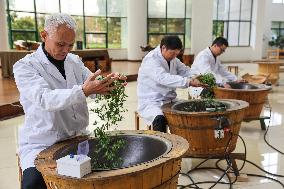
Pan Jintu (1st L), an inheritor of Wuzhou Juyan tea making technique, processes tea leaves with his colleagues at a tea company in Jinhua City of east China's Zhejiang Province, March 31, 2025. The Wuzhou (ancient name of Jinhua) Juyan tea has recently entered its harvest season. The making technique of the Juyan tea, together with that of Longjing tea (West Lake Dragon Well tea), Changxing Zisun tea (a tea variety originated from Changxing County) and some other reputed tea varieties in Zhejiang, was inscribed on the World Intangible Cultural Heritage List in 2022. In recent years, with joint efforts from leading tea companies and Juyan tea making technique inheritors, Juyan tea has quickened its pace of development and moved towards standardized production and industrialization. The development of Juyan tea industry has promoted local eco-tourism and helped increase incomes of local farmers. Photo by Xinhua/Xu Yu/ABACAPRESS.COM

  •  
Tea Harvest Saison - China

Tea Harvest Saison - China

Farmers transfer freshly-picked Juyan tea leaves at a planting base in Lutian Village in Jinhua City of east China's Zhejiang Province, March 31, 2025. The Wuzhou (ancient name of Jinhua) Juyan tea has recently entered its harvest season. The making technique of the Juyan tea, together with that of Longjing tea (West Lake Dragon Well tea), Changxing Zisun tea (a tea variety originated from Changxing County) and some other reputed tea varieties in Zhejiang, was inscribed on the World Intangible Cultural Heritage List in 2022. In recent years, with joint efforts from leading tea companies and Juyan tea making technique inheritors, Juyan tea has quickened its pace of development and moved towards standardized production and industrialization. The development of Juyan tea industry has promoted local eco-tourism and helped increase incomes of local farmers. Photo by Xinhua/Xu Yu/ABACAPRESS.COM

  •  
Tea Harvest Saison - China

Tea Harvest Saison - China

Workers process Juyan tea leaves at a tea company in Jinhua City of east China's Zhejiang Province, March 31, 2025. The Wuzhou (ancient name of Jinhua) Juyan tea has recently entered its harvest season. The making technique of the Juyan tea, together with that of Longjing tea (West Lake Dragon Well tea), Changxing Zisun tea (a tea variety originated from Changxing County) and some other reputed tea varieties in Zhejiang, was inscribed on the World Intangible Cultural Heritage List in 2022. In recent years, with joint efforts from leading tea companies and Juyan tea making technique inheritors, Juyan tea has quickened its pace of development and moved towards standardized production and industrialization. The development of Juyan tea industry has promoted local eco-tourism and helped increase incomes of local farmers. Photo by Xinhua/Xu Yu/ABACAPRESS.COM

  •  
Tea Harvest Saison - China

Tea Harvest Saison - China

Pan Jintu (1st L), an inheritor of Wuzhou Juyan tea making technique, processes tea leaves with his colleagues at a tea company in Jinhua City of east China's Zhejiang Province, March 31, 2025. The Wuzhou (ancient name of Jinhua) Juyan tea has recently entered its harvest season. The making technique of the Juyan tea, together with that of Longjing tea (West Lake Dragon Well tea), Changxing Zisun tea (a tea variety originated from Changxing County) and some other reputed tea varieties in Zhejiang, was inscribed on the World Intangible Cultural Heritage List in 2022. In recent years, with joint efforts from leading tea companies and Juyan tea making technique inheritors, Juyan tea has quickened its pace of development and moved towards standardized production and industrialization. The development of Juyan tea industry has promoted local eco-tourism and helped increase incomes of local farmers. Photo by Xinhua/Xu Yu/ABACAPRESS.COM

  •  
Tea Harvest Saison - China

Tea Harvest Saison - China

Farmers pick Juyan tea leaves at a planting base in Lutian Village in Jinhua City of east China's Zhejiang Province, March 31, 2025. The Wuzhou (ancient name of Jinhua) Juyan tea has recently entered its harvest season. The making technique of the Juyan tea, together with that of Longjing tea (West Lake Dragon Well tea), Changxing Zisun tea (a tea variety originated from Changxing County) and some other reputed tea varieties in Zhejiang, was inscribed on the World Intangible Cultural Heritage List in 2022. In recent years, with joint efforts from leading tea companies and Juyan tea making technique inheritors, Juyan tea has quickened its pace of development and moved towards standardized production and industrialization. The development of Juyan tea industry has promoted local eco-tourism and helped increase incomes of local farmers. Photo by Xinhua/Xu Yu/ABACAPRESS.COM

  •  
Tea Harvest Saison - China

Tea Harvest Saison - China

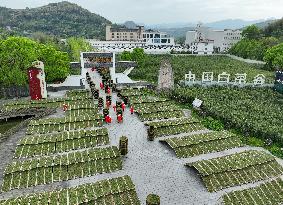
An aerial drone photo shows a Juyan tea planting base in Lutian Village in Jinhua City of east China's Zhejiang Province, March 31, 2025. The Wuzhou (ancient name of Jinhua) Juyan tea has recently entered its harvest season. The making technique of the Juyan tea, together with that of Longjing tea (West Lake Dragon Well tea), Changxing Zisun tea (a tea variety originated from Changxing County) and some other reputed tea varieties in Zhejiang, was inscribed on the World Intangible Cultural Heritage List in 2022. In recent years, with joint efforts from leading tea companies and Juyan tea making technique inheritors, Juyan tea has quickened its pace of development and moved towards standardized production and industrialization. The development of Juyan tea industry has promoted local eco-tourism and helped increase incomes of local farmers. Photo by Xinhua/Xu Yu/ABACAPRESS.COM

  •  

US: Wildfire Erupts in Pittman Center, East Tennessee, Prompts Evacuation 2

A wildfire erupted in the town of Pittman Center, eastern Tennessee on Tuesday, March 4, prompting evacuations of nearby residents. This video was filmed from a car driving on US 321 highway.

  •  
An Agricultural Beverage Production Line in Zhangye

An Agricultural Beverage Production Line in Zhangye

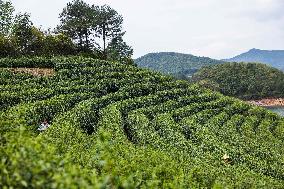
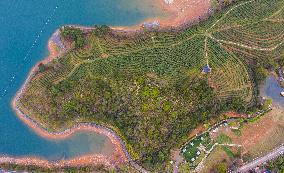
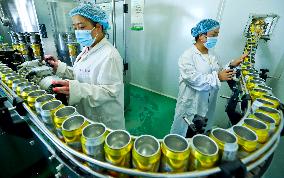
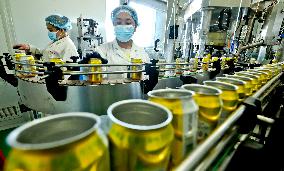
ZHANGYE, CHINA - JULY 27, 2024 - Workers check the operation of canned production of apricot peel tea cans at an agricultural beverage production line in Zhangye city, Gansu province, China, July 27, 2024.

  •  
An Agricultural Beverage Production Line in Zhangye

An Agricultural Beverage Production Line in Zhangye

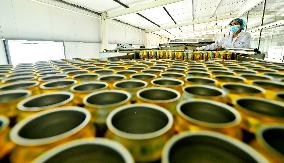
ZHANGYE, CHINA - JULY 27, 2024 - A staff member packs canned apricot peel tea at an agricultural beverage production line in Zhangye city, Gansu province, China, July 27, 2024.

  •  
An Agricultural Beverage Production Line in Zhangye

An Agricultural Beverage Production Line in Zhangye

ZHANGYE, CHINA - JULY 27, 2024 - A staff member sends canned apricot peel tea cans into the runway of the canning production line at an agricultural beverage production line in Zhangye city, Gansu province, China, July 27, 2024.

  •  
An Agricultural Beverage Production Line in Zhangye

An Agricultural Beverage Production Line in Zhangye

ZHANGYE, CHINA - JULY 27, 2024 - Workers check the operation of canned production of apricot peel tea cans at an agricultural beverage production line in Zhangye city, Gansu province, China, July 27, 2024.

  •  
"Laowai" in China | Uruguayan businessman embraces life and work in Yangtze River city

"Laowai" in China | Uruguayan businessman embraces life and work in Yangtze River city

(240720) -- WUHU, July 20, 2024 Photo by Xinhua/ABACAPRESS.COM) -- Gabriel Martin displays a tea set he brought from Uruguay for Mate tea at LOKO steakhouse in the ancient city of Wuhu in Wuhu City, east China's Anhui Province, June 20, 2024. Gabriel Martin is a 40-year-old businessman from Uruguay. Now he has settled in Wuhu City of east China's Anhui Province, running a steakhouse near the Qingyi River, a tributary of the Yangtze River. Martin was deeply impressed by China while watching the 2008 Beijing Olympic Games on TV when he was 24 and later granted an opportunity to continue his study in east China's Shanghai in 2012. During his stay in Shanghai, he realized that China's huge market and Uruguay's large production of high-quality beef could be a great match. Therefore, Martin embarked on the beef trade between China and Uruguay and met his wife Zhang Jin. In 2017, they settled in Zhang's hometown of Wuhu City. While continuing import business of beef, Martin opened a steakhouse with his wife in the a

  •  
(AmazingAnhui)CHINA-ANHUI-JIESHOU-PAINTED POTTERY (CN)

(AmazingAnhui)CHINA-ANHUI-JIESHOU-PAINTED POTTERY (CN)

(240531) -- JIESHOU, May 31, 2024 Photo by Xinhua/ABACAPRESS.COM) -- Xing Shuqin, a provincial inheritor of Jieshou painted pottery, shows a tea pot made by herself at the painted pottery museum in Tianying Township of Jieshou City in east China's Anhui Province, May 23, 2024. The making of Jieshou painted pottery can be traced back to the Tang Dynasty (618-907). Tianying Township in Jieshou City of east China's Anhui Province was the main production site of Jieshou painted pottery in history. The technique of making Jieshou painted pottery was inscribed as a national-level intangible cultural heritage in 2006. To inherit and revive the technique, the local inheritors have innovated the shape and carving patterns to meet the demand of modern society. The cultural and creative products designed by these inheritors are also favored by consumers. Nowadays, Tianying Township not only remains as a production place of Jieshou painted pottery, but also accommodates a museum for displaying potteries and a base for in

  •  
(AmazingAnhui)CHINA-ANHUI-JIESHOU-PAINTED POTTERY (CN)

(AmazingAnhui)CHINA-ANHUI-JIESHOU-PAINTED POTTERY (CN)

(240531) -- JIESHOU, May 31, 2024 (Xinhua) -- Xing Shuqin, a provincial inheritor of Jieshou painted pottery, shows a tea pot made by herself at the painted pottery museum in Tianying Township of Jieshou City in east China's Anhui Province, May 23, 2024. The making of Jieshou painted pottery can be traced back to the Tang Dynasty (618-907). Tianying Township in Jieshou City of east China's Anhui Province was the main production site of Jieshou painted pottery in history. The technique of making Jieshou painted pottery was inscribed as a national-level intangible cultural heritage in 2006. To inherit and revive the technique, the local inheritors have innovated the shape and carving patterns to meet the demand of modern society. The cultural and creative products designed by these inheritors are also favored by consumers. Nowadays, Tianying Township not only remains as a production place of Jieshou painted pottery, but also accommodates a museum for displaying potteries and a base for inheriting and reviving

  •  
(FujianPano) CHINA-FUJIAN-TEA INDUSTRY (CN)

(FujianPano) CHINA-FUJIAN-TEA INDUSTRY (CN)

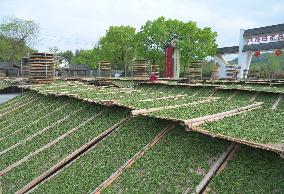
(240512) -- FUZHOU, May 12, 2024 (Xinhua) -- An aerial drone photo taken on April 10, 2024 shows workers airing white tea leaves at a tea garden in Daping Village of Diantou Town in Fuding, southeast China's Fujian Province. China's Fujian Province is a significant contributor to tea production. In recent years, the tea industry of Fujian has been exploring development by cultivating tea culture, accelerating industrialization and utilizing high-tech. The Fujian tea industry, represented by the production of Fuding White Tea, Wuyi Rock Tea and Anxi Tieguanyin Tea, is accelerating its collaboration with cultural tourism and catering and promoting new products of tea beverages and tea snacks which have become the pillar industry in rural revitalization and an important way to increase income for local villagers. (Xinhua/Lin Shanchuan)

  •  
(FujianPano) CHINA-FUJIAN-TEA INDUSTRY (CN)

(FujianPano) CHINA-FUJIAN-TEA INDUSTRY (CN)

(240512) -- FUZHOU, May 12, 2024 (Xinhua) -- Workers air fresh tea leaves at a tea garden in Daping Village of Diantou Town in Fuding, southeast China's Fujian Province, April 10, 2024. China's Fujian Province is a significant contributor to tea production. In recent years, the tea industry of Fujian has been exploring development by cultivating tea culture, accelerating industrialization and utilizing high-tech. The Fujian tea industry, represented by the production of Fuding White Tea, Wuyi Rock Tea and Anxi Tieguanyin Tea, is accelerating its collaboration with cultural tourism and catering and promoting new products of tea beverages and tea snacks which have become the pillar industry in rural revitalization and an important way to increase income for local villagers. (Xinhua/Lin Shanchuan)

  •  
(FujianPano) CHINA-FUJIAN-TEA INDUSTRY (CN)

(FujianPano) CHINA-FUJIAN-TEA INDUSTRY (CN)

(240512) -- FUZHOU, May 12, 2024 (Xinhua) -- A tea maker manually processes tea leaves in Wuyishan City, southeast China's Fujian Province, May 7, 2024. China's Fujian Province is a significant contributor to tea production. In recent years, the tea industry of Fujian has been exploring development by cultivating tea culture, accelerating industrialization and utilizing high-tech. The Fujian tea industry, represented by the production of Fuding White Tea, Wuyi Rock Tea and Anxi Tieguanyin Tea, is accelerating its collaboration with cultural tourism and catering and promoting new products of tea beverages and tea snacks which have become the pillar industry in rural revitalization and an important way to increase income for local villagers. (Xinhua/Jiang Kehong)

  •  
(FujianPano) CHINA-FUJIAN-TEA INDUSTRY (CN)

(FujianPano) CHINA-FUJIAN-TEA INDUSTRY (CN)

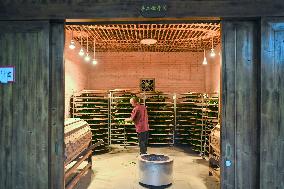
(240512) -- FUZHOU, May 12, 2024 (Xinhua) -- This photo taken on May 8, 2024 shows an interior view of a warehouse of a tea company in Anxi County, southeast China's Fujian Province. China's Fujian Province is a significant contributor to tea production. In recent years, the tea industry of Fujian has been exploring development by cultivating tea culture, accelerating industrialization and utilizing high-tech. The Fujian tea industry, represented by the production of Fuding White Tea, Wuyi Rock Tea and Anxi Tieguanyin Tea, is accelerating its collaboration with cultural tourism and catering and promoting new products of tea beverages and tea snacks which have become the pillar industry in rural revitalization and an important way to increase income for local villagers. (Xinhua/Wei Peiquan)

  •  
(FujianPano) CHINA-FUJIAN-TEA INDUSTRY (CN)

(FujianPano) CHINA-FUJIAN-TEA INDUSTRY (CN)

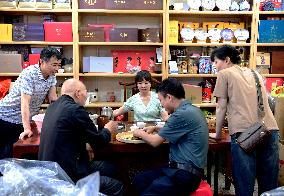
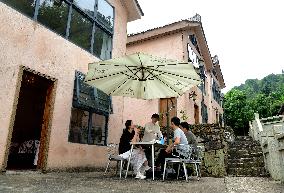
(240512) -- FUZHOU, May 12, 2024 (Xinhua) -- A staff member serves tea to visitors at a tea company in Wuyishan City, southeast China's Fujian Province, May 7, 2024. China's Fujian Province is a significant contributor to tea production. In recent years, the tea industry of Fujian has been exploring development by cultivating tea culture, accelerating industrialization and utilizing high-tech. The Fujian tea industry, represented by the production of Fuding White Tea, Wuyi Rock Tea and Anxi Tieguanyin Tea, is accelerating its collaboration with cultural tourism and catering and promoting new products of tea beverages and tea snacks which have become the pillar industry in rural revitalization and an important way to increase income for local villagers. (Xinhua/Jiang Kehong)

  •  
(FujianPano) CHINA-FUJIAN-TEA INDUSTRY (CN)

(FujianPano) CHINA-FUJIAN-TEA INDUSTRY (CN)

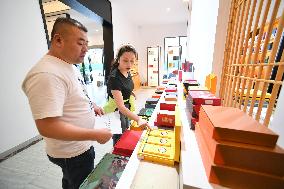
(240512) -- FUZHOU, May 12, 2024 (Xinhua) -- A customer (R) selects tea gift boxes in Wuyishan City, southeast China's Fujian Province, May 7, 2024. China's Fujian Province is a significant contributor to tea production. In recent years, the tea industry of Fujian has been exploring development by cultivating tea culture, accelerating industrialization and utilizing high-tech. The Fujian tea industry, represented by the production of Fuding White Tea, Wuyi Rock Tea and Anxi Tieguanyin Tea, is accelerating its collaboration with cultural tourism and catering and promoting new products of tea beverages and tea snacks which have become the pillar industry in rural revitalization and an important way to increase income for local villagers. (Xinhua/Jiang Kehong)

  •  
(FujianPano) CHINA-FUJIAN-TEA INDUSTRY (CN)

(FujianPano) CHINA-FUJIAN-TEA INDUSTRY (CN)

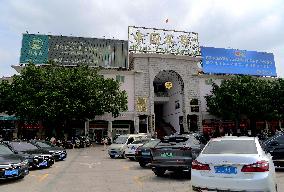
(240512) -- FUZHOU, May 12, 2024 (Xinhua) -- This photo taken on May 8, 2024 shows a tea market in Anxi County, southeast China's Fujian Province. Covering an area of 180,000 square meters, this market is the biggest trading center for Wulong Tea in China. China's Fujian Province is a significant contributor to tea production. In recent years, the tea industry of Fujian has been exploring development by cultivating tea culture, accelerating industrialization and utilizing high-tech. The Fujian tea industry, represented by the production of Fuding White Tea, Wuyi Rock Tea and Anxi Tieguanyin Tea, is accelerating its collaboration with cultural tourism and catering and promoting new products of tea beverages and tea snacks which have become the pillar industry in rural revitalization and an important way to increase income for local villagers. (Xinhua/Wei Peiquan)

  •  
(FujianPano) CHINA-FUJIAN-TEA INDUSTRY (CN)

(FujianPano) CHINA-FUJIAN-TEA INDUSTRY (CN)

(240512) -- FUZHOU, May 12, 2024 (Xinhua) -- Merchants select primary Tieguanyin Tea at a market in Anxi County, southeast China's Fujian Province, May 8, 2024. China's Fujian Province is a significant contributor to tea production. In recent years, the tea industry of Fujian has been exploring development by cultivating tea culture, accelerating industrialization and utilizing high-tech. The Fujian tea industry, represented by the production of Fuding White Tea, Wuyi Rock Tea and Anxi Tieguanyin Tea, is accelerating its collaboration with cultural tourism and catering and promoting new products of tea beverages and tea snacks which have become the pillar industry in rural revitalization and an important way to increase income for local villagers. (Xinhua/Wei Peiquan)

  •  
(FujianPano) CHINA-FUJIAN-TEA INDUSTRY (CN)

(FujianPano) CHINA-FUJIAN-TEA INDUSTRY (CN)

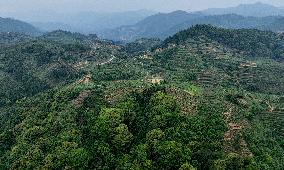
(240512) -- FUZHOU, May 12, 2024 (Xinhua) -- An aerial drone photo taken on May 9, 2024 shows a planting base for Tieguanyin Tea in Xiping Township of Anxi County, southeast China's Fujian Province. China's Fujian Province is a significant contributor to tea production. In recent years, the tea industry of Fujian has been exploring development by cultivating tea culture, accelerating industrialization and utilizing high-tech. The Fujian tea industry, represented by the production of Fuding White Tea, Wuyi Rock Tea and Anxi Tieguanyin Tea, is accelerating its collaboration with cultural tourism and catering and promoting new products of tea beverages and tea snacks which have become the pillar industry in rural revitalization and an important way to increase income for local villagers. (Xinhua/Wei Peiquan)

  •  
(FujianPano) CHINA-FUJIAN-TEA INDUSTRY (CN)

(FujianPano) CHINA-FUJIAN-TEA INDUSTRY (CN)

(240512) -- FUZHOU, May 12, 2024 (Xinhua) -- Tourists taste Tieguanyin Tea at a tea garden in Gaizhu Village of Xiping Township in Anxi County, southeast China's Fujian Province, May 9, 2024. China's Fujian Province is a significant contributor to tea production. In recent years, the tea industry of Fujian has been exploring development by cultivating tea culture, accelerating industrialization and utilizing high-tech. The Fujian tea industry, represented by the production of Fuding White Tea, Wuyi Rock Tea and Anxi Tieguanyin Tea, is accelerating its collaboration with cultural tourism and catering and promoting new products of tea beverages and tea snacks which have become the pillar industry in rural revitalization and an important way to increase income for local villagers. (Xinhua/Wei Peiquan)

  •  
(FujianPano) CHINA-FUJIAN-TEA INDUSTRY (CN)

(FujianPano) CHINA-FUJIAN-TEA INDUSTRY (CN)

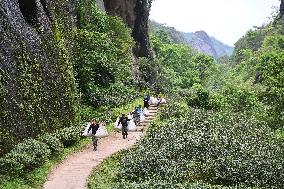
(240512) -- FUZHOU, May 12, 2024 (Xinhua) -- Workers carry tea leaves at a planting base of Wuyi Rock Tea in Wuyishan City, southeast China's Fujian Province, May 7, 2024. China's Fujian Province is a significant contributor to tea production. In recent years, the tea industry of Fujian has been exploring development by cultivating tea culture, accelerating industrialization and utilizing high-tech. The Fujian tea industry, represented by the production of Fuding White Tea, Wuyi Rock Tea and Anxi Tieguanyin Tea, is accelerating its collaboration with cultural tourism and catering and promoting new products of tea beverages and tea snacks which have become the pillar industry in rural revitalization and an important way to increase income for local villagers. (Xinhua/Jiang Kehong)

  •  
(FujianPano) CHINA-FUJIAN-TEA INDUSTRY (CN)

(FujianPano) CHINA-FUJIAN-TEA INDUSTRY (CN)

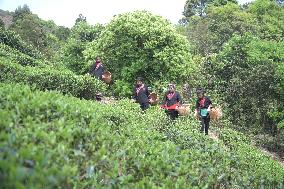
(240512) -- FUZHOU, May 12, 2024 (Xinhua) -- Villagers pick fresh tea leaves in Fangjiashan Village of Fuding, southeast China's Fujian Province, April 11, 2024. China's Fujian Province is a significant contributor to tea production. In recent years, the tea industry of Fujian has been exploring development by cultivating tea culture, accelerating industrialization and utilizing high-tech. The Fujian tea industry, represented by the production of Fuding White Tea, Wuyi Rock Tea and Anxi Tieguanyin Tea, is accelerating its collaboration with cultural tourism and catering and promoting new products of tea beverages and tea snacks which have become the pillar industry in rural revitalization and an important way to increase income for local villagers. (Xinhua/Lin Shanchuan)

  •  
(FujianPano) CHINA-FUJIAN-TEA INDUSTRY (CN)

(FujianPano) CHINA-FUJIAN-TEA INDUSTRY (CN)

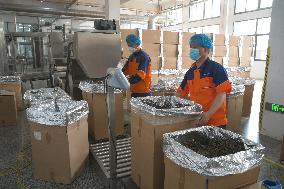
(240512) -- FUZHOU, May 12, 2024 (Xinhua) -- Workers package semi-finished white tea products at a tea company in Fuding, southeast China's Fujian Province, April 10, 2024. China's Fujian Province is a significant contributor to tea production. In recent years, the tea industry of Fujian has been exploring development by cultivating tea culture, accelerating industrialization and utilizing high-tech. The Fujian tea industry, represented by the production of Fuding White Tea, Wuyi Rock Tea and Anxi Tieguanyin Tea, is accelerating its collaboration with cultural tourism and catering and promoting new products of tea beverages and tea snacks which have become the pillar industry in rural revitalization and an important way to increase income for local villagers. (Xinhua/Lin Shanchuan)

  • Main
  • Top
  • Editorial
  • Creative
  • About Us
  • About ILG
  • Terms of use
  • Company
  • BEHIND
  • Price List
  • Single Plan
  • Monthly Plan
  • Services
  • Shooting
  • Rights Clearance
  • Support
  • FAQ
  • How To Buy
  • Contact Us
  • Become a Partner

© KYODO NEWS IMAGES INC

All Rights Reserved.

  • Editorial
  • Olympics
  • News
  • Sports
  • Japan
  • Tech
  • Royal
  • Disaster
  • NorthKorea
  • Old Japan
  • SNS

  • Creative
  • Food
  • Japan
  • Landscape
  • Animal
  • Popular
  • #Ukraine
  • #Thailand
  • #coronavirus
  • #N. Korea
  • #China
  • #Russia
  • #Ukraine
  • #Thailand
  • #coronavirus
  • #N. Korea
  • #China
  • #Russia
  • Food
  • Japan
  • Landscape
  • Animal
  • Olympics
  • News
  • Sports
  • Japan
  • Tech
  • Royal
  • Disaster
  • NorthKorea
  • Old Japan
  • SNS